
Whether you’re B2B or B2C, picking the right CRM platform can be a make-or-break decision for a business in today’s dynamic landscape. With so many choices, cutting through the noise and finding the best option for your brand is easier said than done. We did the hard work, so you don’t have to. Use this Klaviyo CRM comparison to find your ideal CRM platform today.
Table of Contents
The Rundown
In this quick Coalition Technologies overview, you’ll learn more about:
- Klaviyo CRM excels at:
- Automation and pre-built workflows
- Growth for B2C ecommerce brands
- A unified data platform
- AI-powered tools for segmentation
- Zoho, Klaviyo CRM’s competitor, excels at:
- Extensive customization
- Growth for B2B brands both online and offline
- A broader ecosystem of in-house Zoho tools
- Powerful sales management features
Klaviyo CRM
Who Is It For?
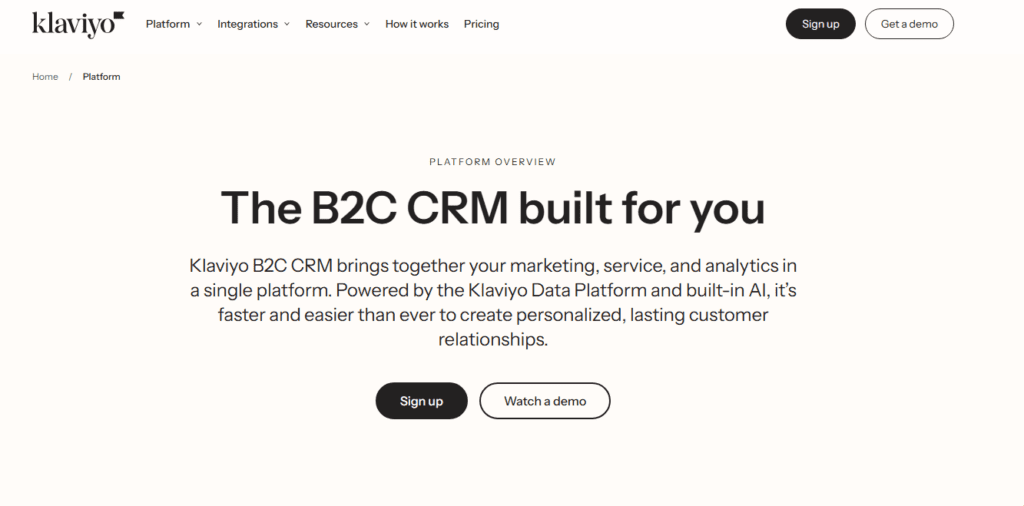
Looking at Klaviyo CRM vs. Zoho CRM, it’s easy to see Klaviyo was designed for ecommerce businesses from the ground up. Klaviyo CRM is great for:
- Small to Mid-Sized Ecommerce Businesses: Klaviyo CRM is a breeze to use for smaller, less experienced businesses across platforms like Shopify, BigCommerce, and WooCommerce. You also get scalable pricing, which lowers the barrier to entry for smaller ecommerce brands, while still offering the advanced features you need to grow.
Unlike many of Klaviyo CRM’s competitors, Klaviyo shines for retailers that lean into personalization to connect with their customers. If your goal is boosting conversions and growing average order values through loyal customers, Klaviyo CRM might be the right choice.
Evaluating Klaviyo CRM vs. Zoho CRM only gets you halfway there. To get the most out of a platform like Klaviyo, you’ll need a trusted Klaviyo partner like Coalition Technologies to implement it. Expert assistance can go a long way if you’re switching to a new CRM and looking to leverage a powerful set of new features.
Klaviyo CRM: The Pros
- Powerful Customer Segmentation: With Klaviyo Marketing, this CRM offers dynamic segmentation based on customer data (e.g., behavior and purchase history). You can granularly filter that data with attributes like location and even product preferences.
The cherry on top? These segments are updated automatically within the CRM as customer data changes, minimizing the chances of errors and saving time. - Klaviyo AI: AI? Not just a buzzword here. This exciting addition to the platform really differentiates Klaviyo CRM vs. Zoho CRM. These AI-powered marketing tools can help you uncover new insights from massive amounts of data.
For example, it can review customer sentiment (by analyzing feedback) to tell you which products are most popular with buyers, and which ones need more work. - Klaviyo Service: Any Klaviyo CRM comparison is incomplete without mentioning Klaviyo Service. This is a unique feature that stands apart from Klaviyo’s competitors, combining service and marketing-centric tools into one cohesive product.
What does that mean in action? You can use your unified customer data pool for personalized support and marketing campaigns, directly within your CRM. For instance, Klaviyo’s Customer Hub promises always-on customer service through live agents and even pre-sales AI agents that can intelligently answer common queries. - Unified Data Platform: A more user-friendly, unified data platform is a key highlight for Klaviyo CRM vs. Zoho CRM. Klaviyo makes it easy to identify and track customer interactions across multiple service channels, using that data to build customer profiles so you can offer the best possible service for buyers.
Klaviyo CRM: The Cons
- Ecommerce Focus: Klaviyo CRM is designed from the ground up for ecommerce B2C brands, which can limit its function for non-retail businesses and industries that need broader CRM functionalities (like consulting).
- Pricing: Klaviyo’s scalable pricing is both a boon and a limitation. It does lower the barrier for entry, but it also means mounting costs as your customer database grows.
Zoho CRM
Who Is It For?
If we compare Klaviyo CRM vs. Zoho CRM, Zoho stands out with a broader, ecosystem-based approach to customer relationship management.
- B2B Businesses: As a major Klaviyo CRM competitor, Zoho CRM can support B2B businesses’ longer, more complex sales cycles. The CRM offers tools for easy account management, deal tracking, and even partner collaboration. B2B-specific features like territory management are excellent for larger companies that need to segment their data by location.
- Mid-Sized Businesses: While Zoho CRM’s a good fit for smaller B2B brands, it really shines in the mid-sized segment. The platform prides itself on offering enterprise-level features at accessible price points.

Zoho CRM: The Pros
- Customizability: Klaviyo CRM vs. Zoho CRM boils down to pre-built accessibility vs. extensive customization. Zoho CRM isn’t as easy to use, but it allows businesses to customize fields, pipeline, and workflows to align perfectly with their unique processes.
This is great for custom solutions in sectors like real estate and manufacturing, where a good CRM needs to be agile to keep up with dynamic business requirements. - Sales Management: Compared to Klaviyo CRM, Zoho stands out with stronger sales management features. These include drag-and-drop tracking for deals and sales forecasting with up-to-date data. Blueprint is another great feature to call out here, which standardizes sales workflows across multiple teams, making it ideal for larger businesses.
- Integrations: Both CRMs support a wide range of integrations with third-party apps. Comparing Klaviyo CRM vs. Zoho CRM, however, it’s worth pointing out that Zoho provides a much bigger in-house list of tools like Zoho Books and Zoho Campaigns.
- Analytics: Analytics and reporting are a major strong suit for this Klaviyo CRM competitor. Businesses can generate customizable reports and dashboards to track essential KPIs in real time, whether that’s for sales, customer support, or marketing.
Zoho CRM: The Cons
- Ease of Use: Zoho CRM isn’t quite as accessible as Klaviyo CRM, with its pre-built workflows and dashboards. While Zoho does offer no-code solutions for customization, there’s still a much steeper learning curve for newcomers here.
- Limited Basic Plans: Barrier to entry is one place where Klaviyo CRM shines vs. Zoho CRM. Zoho locks essential features like Zia AI, Blueprint, and even its detailed analytics tools, to higher-tier plans.
- Zoho Ecosystem Lock-In: Despite its support for third-party integrations, Zoho CRM still works best with other Zoho apps. This could lock businesses into using multiple Zoho products and even increase costs.
Find The Right CRM Today
Consult an award-winning digital marketing agency and find the perfect CRM solution for your business today. Contact Coalition Technologies for a free consultation and find out how the right CRM can multiply your sales today.
Frequently Asked Questions
Klaviyo CRM vs. Zoho CRM: which one is better?
It depends. Klaviyo CRM is great for small to mid-sized B2C ecommerce businesses, while Zoho CRM is designed for B2B brands both online and offline.
What are the main competitors to Klaviyo CRM?
Klaviyo’s biggest competitors are HubSpot, Zoho, and Salesforce.
Can I use a CRM myself?
You can, but your results may vary. Effectively using a CRM means keeping track of potentially hundreds of metrics across multiple teams. A dedicated ecommerce agency can help you analyze that data and use it to launch powerful campaigns that always hit the mark.