The official White House website recently experienced a dramatic decrease in organic search visibility. What’s causing this nosedive, and why should content creators be paying attention? Get the inside track with Coalition Technologies.
Table of Contents
What’s Going On?
The White House website, until recently, held top positions on Google for several relevant keywords:
- President Jimmy Carter (-11,928 visits)
- Franklin D. Roosevelt (-8,102 visits)
- Labor Day 2024 (-7,937 visits)
- Andrew Jackson (-90,385 visits)
- Grover Cleveland (-24,047 visits)
The White House website held the #1 position on search engine results pages (SERPs) for these keywords until a drastic shift in their digital strategy, in which several top-ranking pages were deleted. The deleted pages include:
| Deleted Page | Change in Traffic (November to January) |
| Presidents | -394,179 |
| The Executive Branch | -325,412 |
| Vice President Harris | -265,458 |
| President Biden | -248,571 |
| The Legislative Branch | -131,742 |
These deletions led to:
- A Loss of Ranking Keywords: High-performing content ranks well for specific keywords. If you delete the content, you’ll lose the ability to rank for those keywords. This naturally leads to decreased traffic and overall visibility since searchers will just choose to click on whatever page is ranked first now.
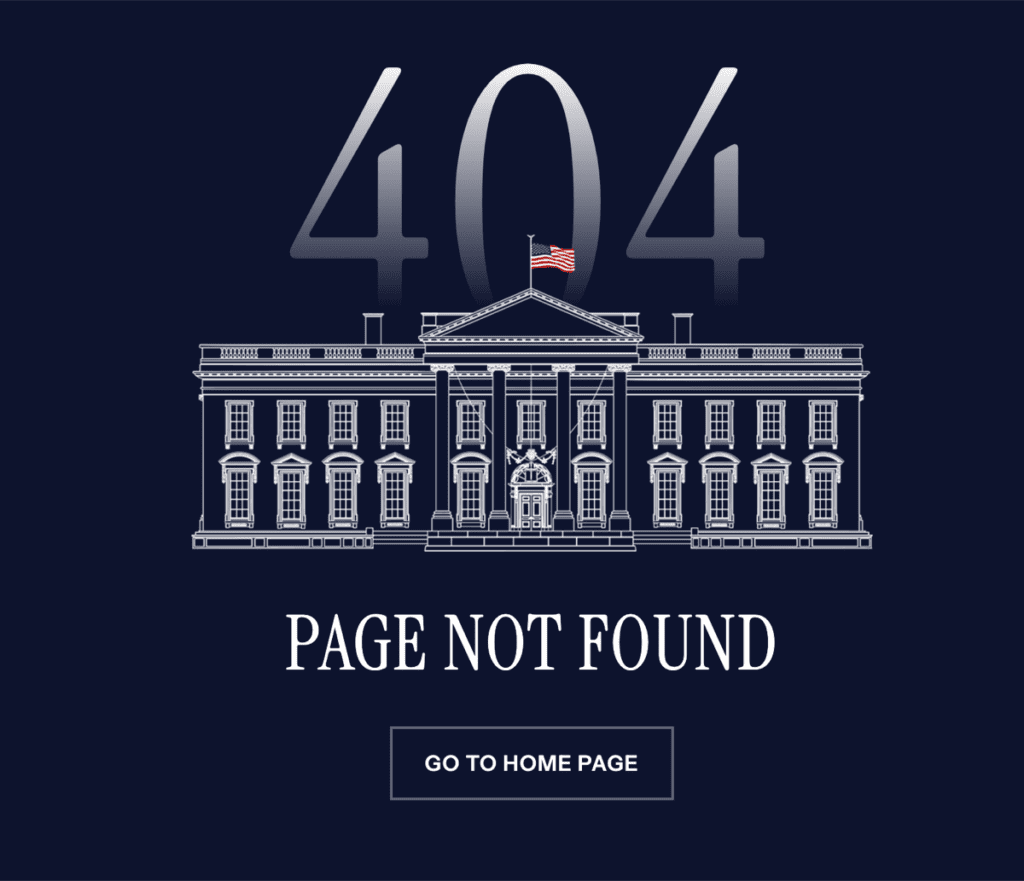
- Backlink Loss: Popular content usually gets many backlinks from other websites. Each backlink works as a vote of confidence in the content’s quality and adds to your domain authority. Deleting these pages means those backlinks now point to a 404, harming the White House website’s overall authority.
Malicious Agenda, Or a Misguided Migration?
News outlets and pundits have quickly criticized the changes, denouncing them as a deliberate political move to pull focus away from previous presidents and DEI-adjacent topics, putting President Trump in the spotlight. GLAAD president Sarah Kate Ellis criticized the removal of LGBTQIA+ and HIV-related content as an “attempt to diminish the community.”
The likely truth lies somewhere in the middle.
White House Deputy Press Secretary Harrison Fields noted that federal web developers are editing and tweaking the website and are “committed to reloading that content in a short timeline.” A quick look at the archives can help shine more light on the matter.
The White House Website Archives
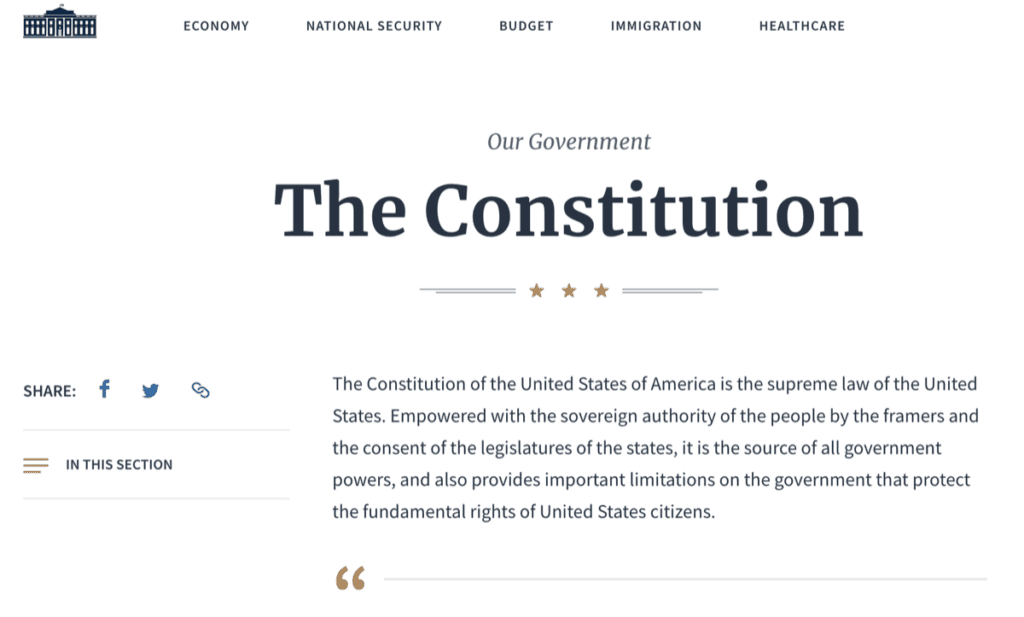
An archived version of the White House website shows that during President Trump’s first term, the administration reworked and maintained key pages covering the Constitution, previous presidents, and the executive branch. This indicates that the current 404 pages are placeholders and will be replaced. However, the Spanish-language version of the website wasn’t restored until President Biden’s administration.
Why Were The Pages Deleted?
It is, in fact, standard practice for administrations to rework the White House website to align with their policy agenda. Looking at the archived versions of previous White House websites and considering the White House’s press statements, we can fully expect traditional pages like the legislative and executive branches, previous presidents, and the Constitution to be reuploaded after the rework.
Should these pages have been deleted in the first place? Absolutely not.
A 404 is the worst thing you can do for your website if it already ranks well for competitive keywords. Recouping lost traffic can take months if not years. The developers should have had a migration plan and paired the deletions with 301 redirects to more up-to-date content.
Getting that traffic back might be easier for the White House, but regular businesses can’t afford the hit.
The Big Takeaway for Businesses
There’s a lot to learn from this simple SEO mistake for businesses in similar positions. If your company is undergoing significant changes, such as a change in leadership or product focus, you should always prioritize revising existing content instead of deleting it outright.
If you’re sunsetting a product and replacing it with an updated version, use a 301 redirect to preserve link equity. If redirecting isn’t an option for a deleted page, create a placeholder explaining the change and linking to relevant content.
Let’s sum up the highlights:
- Deletions = Last Resort: Nuking your website with 404s–even if the intention is to update content–should be avoided. Deleting content without a plan will severely harm the user experience and cause you to lose out on valuable traffic.
- Redirect!: If deletion is unavoidable, you should implement 301 redirects to a relevant, high-quality page.
- Backlink Management Matters: If you’re deleting pages with multiple valuable backlinks, consider creating similar pages with more up-to-date content so you can leverage those links instead of losing them.
- Archiving: Archiving is always an option if you have outdated content. This way, users can find it if needed, and you won’t lose out on search engine traffic.
Get a Better Digital Marketing Strategy
The most minor mistakes can lead to massive losses in search engine visibility, and course correction isn’t always easy. Speak to a digital strategist today for a more effective growth strategy and push your website to the top. Give your brand the Coalition Technologies boost today.