

Voice search represents one of the biggest changes to the marketing landscape in recent memory, embodying many evolving consumer trends that businesses are still struggling to keep up with. Any business looking to stand out heading into 2025 needs to understand how voice search affects SEO and how they can use voice search marketing to their advantage. Get the winning edge with this Coalition Technologies guide.
Table of Contents
What is Voice Search?
‘Voice search’ is fairly self-explanatory. It’s the process of using voice commands to conduct searches online. You’ve probably already seen prompts for voice searches on popular apps like YouTube and, of course, Google.
While traditional searches rely heavily on keywords, voice searches are powered by voice recognition technology, allowing platforms to interpret queries and deliver the right results. This voice search optimization technology is backed by sophisticated natural language processing algorithms, allowing users to look for information more naturally and conversationally.
Make no mistake, voice search is not ‘new’ by any means. Google started its first beta for voice search all the way back in 2011, with Google Assistant building on that foundation with its 2016 release. However, it’s only recently that voice search has become a dominant consumer trend, with over 50% of consumers using voice search daily, up from 27% in 2016.
What’s Driving This Surge?
So, why exactly is voice search SEO a concern now? And what’s the real reason consumers have recently warmed up to voice search? Let’s take a closer look at some of the main factors driving this top trend and why you need to pay more attention to voice search optimization:
- Smart Device Availability: Smart devices are impossible to get away from now. From major smart TV models implementing Google Assistant to cars coming with built-in Apple CarPlay integration, nearly every major device supports voice commands and search.
Compare this to the consumer market pre-2018, where voice search was a rudimentary feature found in home assistants like Alexa. Increased usage is inevitable with constant access. - Improvements in Voice Recognition: Voice search marketing is now a major focus because voice search simply works better than ever. Companies like Apple, OpenAI, and Amazon have been at the forefront of voice recognition technology, constantly improving their offerings by innovating through machine learning and AI.
Apple’s latest iPhone showcase is an excellent example of AI-driven voice search optimization. Apple Intelligence supports text and voice-based commands, building on Siri’s foundation and allowing users to interact more naturally with their devices. Siri can now more accurately understand the true intent behind a query, even if it hasn’t been phrased perfectly. Contextual awareness also gets a huge boost here, with the voice assistant retaining the context of older interactions. - Convenience: Convenience is the natural consequence of increased availability and improved technology. Voice search SEO matters because it helps businesses capitalize on the most convenient way to search. Picking up your phone and asking it about local businesses is infinitely faster and more convenient than the traditional, keyword-based alternative. Now that voice search works consistently, there’s no reason not to use it.
How Voice Search is Changing UX
The quest for voice search optimization profoundly affects the user experience (UX) across major platforms.
Traditional UX prioritizes visual cues, snappy navigation, and structured information. While these are all still major priorities, we’re also seeing an increased focus on auditory feedback and interaction through feedback mechanisms. When users make a voice search, they need to know it’s been received and is being processed immediately. Let’s see what else has changed:
- Voice search users demand instant answers. A slow-loading website will drive users away and negatively affect your search engine rankings.
- Contextual awareness is a key part of voice search optimization. Designers need to provide personalized, relevant responses based on the user’s location and usage history.
- Voice recognition is better but not perfect. UX designers need to account for a certain margin of human error and gracefully guide users toward a successful conversion. Map apps, for example, do this well with fuzzy logic.
How Do Voice Search Algorithms Work?
Voice search marketing strategies and algorithms can vary from platform to platform. That said, we can break the general process down into four steps for the sake of this voice search SEO guide:
| Automatic Speech Recognition | Natural Language Processing | Query Formulation | Information Retrieval |
| Several different components work together to convert raw speech into text. This involves signal processing and voice isolation. | Once the raw speech has been turned into text, NLP techniques are used to process and derive meaning from the input. | Now that we know the intent behind the input, the natural language query can be turned into a structured search query. | Similar to standard searches, this step involves retrieving information based on the query. The results are then synthesized back into speech. |
Voice Search Optimization
Optimizing for the usual short-tail keywords just won’t be enough in this new era of search. Google estimates that 62% of regular smart device users make a purchase through voice search at some point. Here’s how you can capitalize on that:
- Zero Fluff: Abandon keyword-stuffing and think about how searchers interact with their devices. What kind of questions are they really asking? If you can answer those questions in a way that satisfies searchers, you’ve succeeded.
This usually means a stronger focus on content that directly answers common questions. Many websites add FAQ sections to their existing pages to fulfill this requirement, structuring their questions around common, general queries.
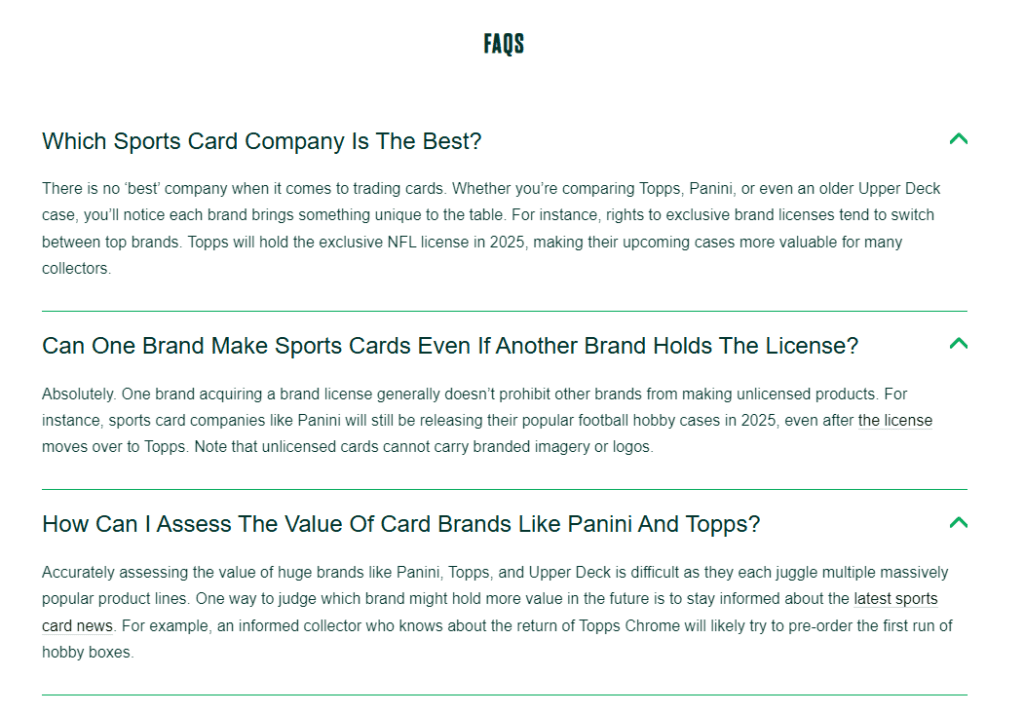
If you’re creating a blog and optimizing it for voice search, use subheadings that reflect common questions and answer them succinctly. The ‘People Also Ask’ section provided by Google is a good guide to follow here.
- Long-Tail Keywords: Voice search SEO relies heavily on long-tail keywords, as they are more representative of a typical conversational search query. These keywords are more specific and signal higher intent than short-tail keywords, and it’s worth taking the time to research them and use them in your voice search marketing strategy.
You can use tools like Ahrefs to get started with your keyword research. However, if you’re unfamiliar with keyword research or SEO in general, we recommend working with a trusted digital marketing specialist to create a custom strategy for your business. - Localize Content: Voice search optimization should capture buyers who already know what they’re looking for. For example, if a local searcher asks for ‘Italian restaurants near me,’ your outlet should be mentioned as a top recommendation. You can do this by including details like your city and state along with relevant keywords on your pages.
Voice Search and Technical SEO
Technical SEO plays a key role in any optimization strategy. Voice search users expect instant results, so you’ll want to ensure your website loads as quickly as possible by using optimized images, efficient code, and caching. If you’re on a platform like WordPress or Shopify, you can also use a plugin to help you get started.
Mobile-first indexing is another huge priority for voice search SEO. Google automatically indexes mobile versions of websites first, and most voice searches also originate from mobile phones. If you’re optimizing for voice search, ensure your mobile site loads quickly, is well-structured, and follows the UX principles mentioned above.
Lastly, you’ll want to ensure you’re implementing speakable structured data in your pages where relevant. This schema has been in beta for years, but it plays a vital role in helping voice assistants understand your content. If implemented well, it could potentially boost your discoverability.
How Featured Snippets Can Help
Featured snippets are concise answers pinned to the top of a Google search results page. Along with Google’s new AI Overviews feature, getting cited here can be an excellent way to draw in new visitors with a voice search marketing strategy. The best practices to follow here are nearly identical to our ‘voice search optimization’ section.
Remember, voice search is also bleeding over into Gemini, ChatGPT, and other chatbot tools. AI and multi-modal search trends cannot be ignored as we head into 2025, and optimizing early can make all the difference.
Optimize With Voice Search Today
Get that first mover’s advantage and propel your business to the top with voice search SEO. Work with Coalition Technologies, a leading SEO agency, and find out how you can optimize your website for success. Contact us for a free consultation, and build tomorrow’s websites today.