Key Takeaways
- A zero-click search is when a user doesn’t click to visit another website in their search result because they already got the answer they needed in a snippet or AI overview.
- 58.5% of US Google searches and 59.7% of EU searches resulted in zero clicks in 2024.
- The remaining 40% are called ‘click-through searches’, and are where digital marketers should focus most.
- Try changing keywords that lead to comprehensive AI overviews that are unlikely to convert.
- Try replicating content that generates clicks.
- Try creating content that increases your website’s chance of being pulled into AI overviews.
Table of Contents
What Is a Zero-Click Search?
A zero-click search (ZCS) occurs when a user finds the answer to their query on the search engine results page (SERP), and does not need to click one of the links in their search result.
To help make search results more helpful, Google displays featured snippets from certain websites, as well as AI overviews (AIOs) that might directly answer the user’s questions. While these features are nice for users, these zero-click searches on Google can hurt the visibility of businesses that rely on search traffic from Google. If that sounds like you, we’re here to help.
What Makes a Search Zero-Click?
There has always been some rate of zero-click searches. It’s always been possible to get some information directly from the meta descriptions in your search results. But zero-click started to gain ground in 2014 when Google introduced Featured Snippets.
Featured Snippets
These are numbers or short summaries designed to concisely answer your question as quickly as possible. After all, not everyone wants to read an entire article just to find out how many calories are in a banana!
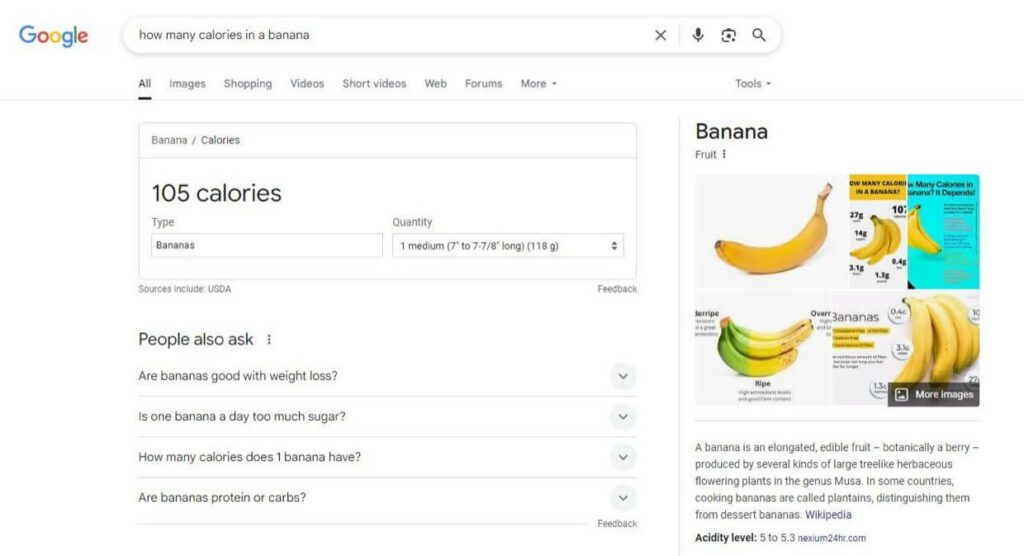
In the past, banana experts were able to rake in organic traffic by targeting relevant queries like “how many calories in a banana.” Now, in a cruel twist of fate, zero-click searches often occur because Google’s algorithms pull information from those popular websites, regurgitating their information in an easily digestible format that requires, you guessed it, zero clicks.
AI Overviews (AIOs)
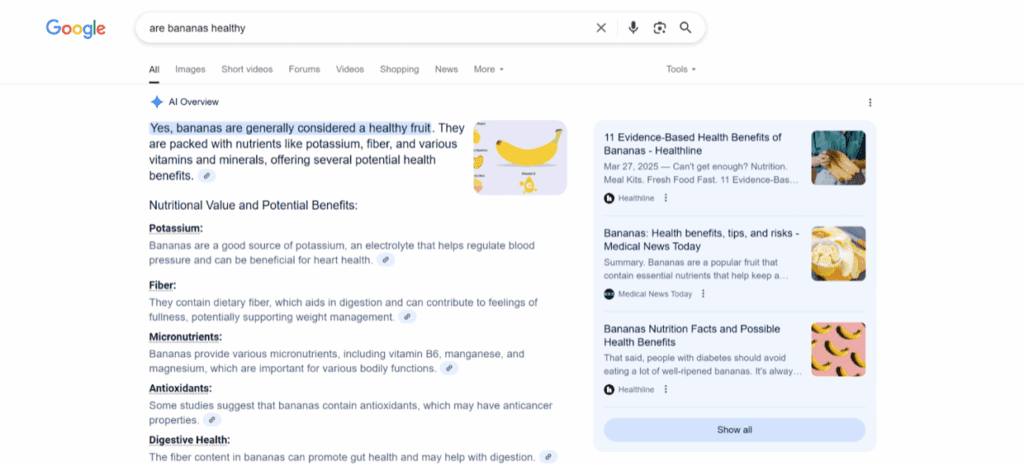
Zero-click searches really started to take off with Google’s AI overview (AIO) feature, added in 2024. Powered by Google’s Gemini AI model, it uses multi-step reasoning, planning, and multimodality into a summary it thinks will best answer your search query. With AIOs, Google isn’t just quoting other websites, it generates a custom response using insights from multiple online sources.
This allows Google to provide more detailed information in response to more complex or nuanced questions, like whether or not bananas are healthy.
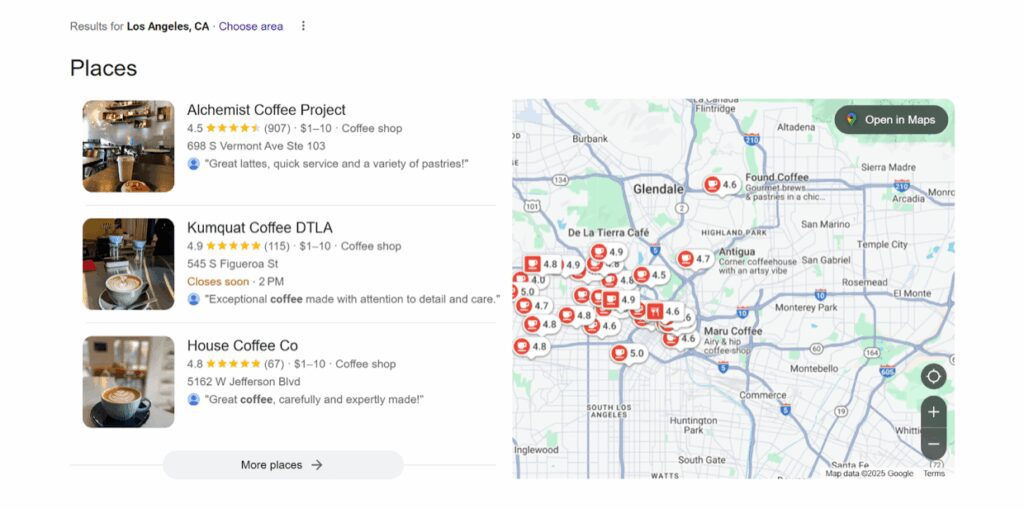
Local Pack Results
The places returned in a search that Google sees as local are called the “local pack”. There, you can find and compare the details of businesses like their location, reviews, and menu directly on the landing page. While these searches may technically be zero-click if people don’t visit the business’s website, the issue isn’t quite as pronounced because they still get customers through their door.
What Does This Mean for Businesses & Search Marketing?
It’s not just banana gurus who are taking a hit in traffic. E-commerce businesses, content creators, and anyone who depends on clicks are starting to experience stagnation or a reduction in their search traffic. In its quest to be the most helpful search engine, Google is reducing the need for its users to visit individual websites for more information.
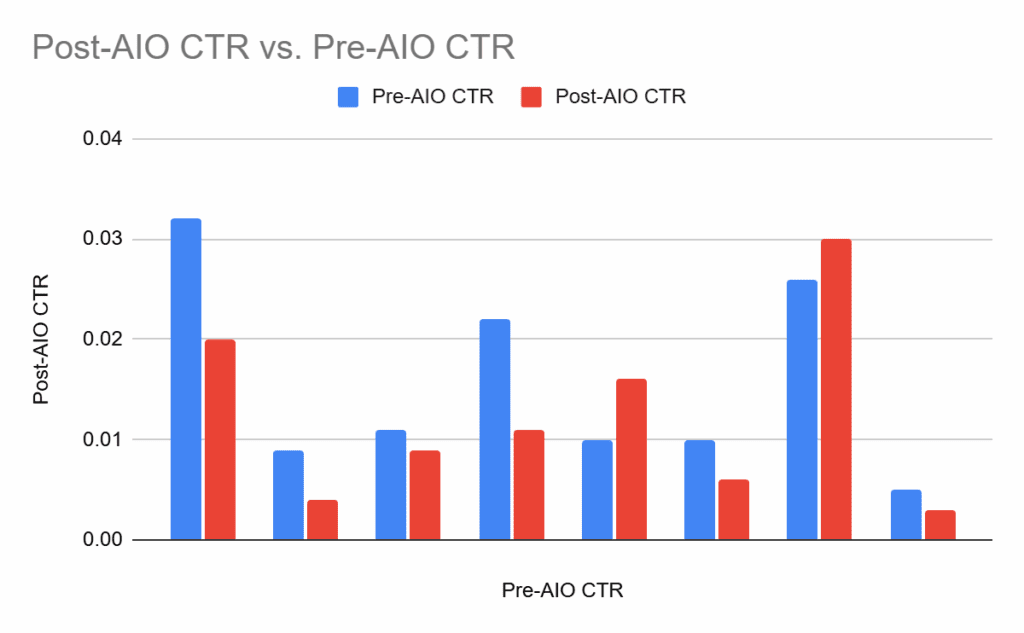
We took samples of our clients’ Click-Thru Rate (CTR) data from before and after the public launch of Google’s AI Overviews to see its impact on the rate of zero-click searches. We saw a 35.89% average decrease in CTR – from 1.56% to 1.00%
What Can You Do About Zero-Click Searches?
Fortunately, you’re in the right place for actionable zero-click SEO solutions. As one of the world’s best SEO agencies, we’re constantly adapting to the ever-evolving digital realm. While we’re not going to give away all of the ingredients to our secret sauce, we’re happy to provide some tips and insight. First, let’s get a few common questions out of the way.
Frequently Asked Questions
What percent of Google searches are zero-click?
In 2024, 58.5% of Google searches in America and 59.7% of EU searches resulted in zero clicks, according to SparkToro.
Nearly 60% is a sharp rise compared to 2022, when 25.6% of desktop queries and 17.3% of mobile queries resulted in zero clicks.
It’s extremely likely that this trend will continue; Google’s AI isn’t going anywhere, and users are becoming increasingly accustomed to rapid-fire answers. Technology moves forward, not back. We can expect Google to continue seeking ways to improve user experience, often at the cost of the content creators who provide the information in the first place.
How do I optimize for zero click searches?
One zero-click search optimization strategy is to focus on the remaining 40% of click-through searches. By identifying the metrics that led users to click to an external website, you can implement strategies that replicate similar pathways.
Another approach is to test keywords to see if they return comprehensive AI overviews that could discourage further clicks. When you identify a risky keyword, you can slightly alter it until you find a better fit.
Finally, it’s important to note that you can use AI overviews to your advantage. If your brand shows up in the AI overview, you’re still building awareness, even if you don’t get that immediate click. Most zero-click searches are informational in nature, putting them toward the top of the conversion funnel, or beginning of the customer journey. Visibility here often translates to conversions later.
Take our client, Kangol, for example. When someone searches for “what brand makes bucket hats,” Kangol gets a top spotlight.
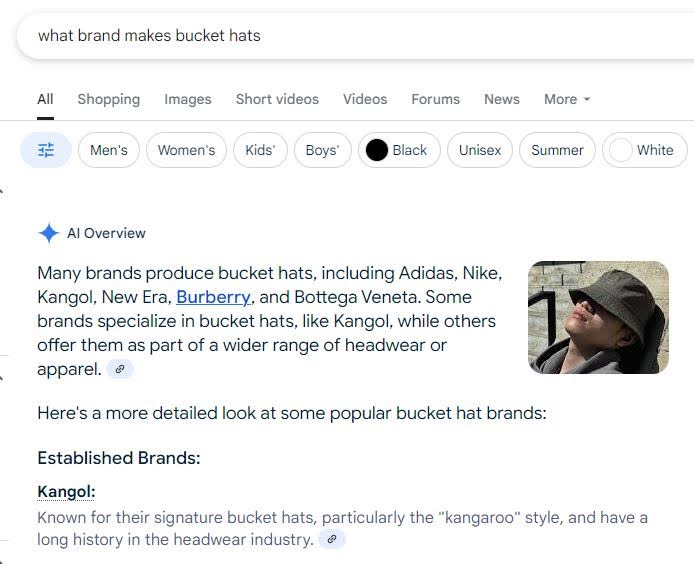
Even if Google zero-click searches occur, that user will have Kangol at the top of mind when they’re ready to buy. AI overviews are non-transactional, so they’re going to have to click eventually.
Let’s explore these zero-click SEO concepts further.
Need help adjusting your SEO strategy for zero-click searches?
Focusing on Click-Through Searches
What’s the opposite of a zero-click search? A click-through search. Without giving up on the 60% of missed opportunities, you may want to ramp up your focus on strategies that are proven to lead to conversions.
SEO isn’t static. We’re constantly and actively reevaluating, readjusting, and fine-tuning our approach to not only keep up, but stay ahead.
In this context, that means we’re identifying which keywords lead to zero-click searches but still provide value, such as driving brand awareness or getting featured in the link cards to the right of the AIO. We also identify (and avoid) keywords that are unlikely to convert or provide value.
This approach must encompass the past, present, and future. We leverage existing data to identify once successful keywords that have stopped performing. This data informs targeted decisions that will impact the click-through rate down the line.
In other words, it’s not about just fixing the immediate problem, but setting the stage for ongoing growth that aligns with evolving algorithms.
Zero-click search optimization requires in-depth experience. While it’s impossible to predict the future with 100% accuracy, we have the first-hand knowledge required to cultivate seeds that are highly likely to flourish. Now is the time to nip zero-click searches in the bud.
We’ve navigated algorithmic storms before, and we’ll do it again. And again. Zero-click SEO is simply an extension of what we’ve been doing for years.
Using AI Overviews to Your Advantage
Missed clicks aren’t ideal, but they’re not the end of the world. In fact, Google’s AIOs can be a boon if you play your cards right. For example, let’s say someone searches “what is lea black skincare brand.” Google’s AIO provides a nice summary with link cards.
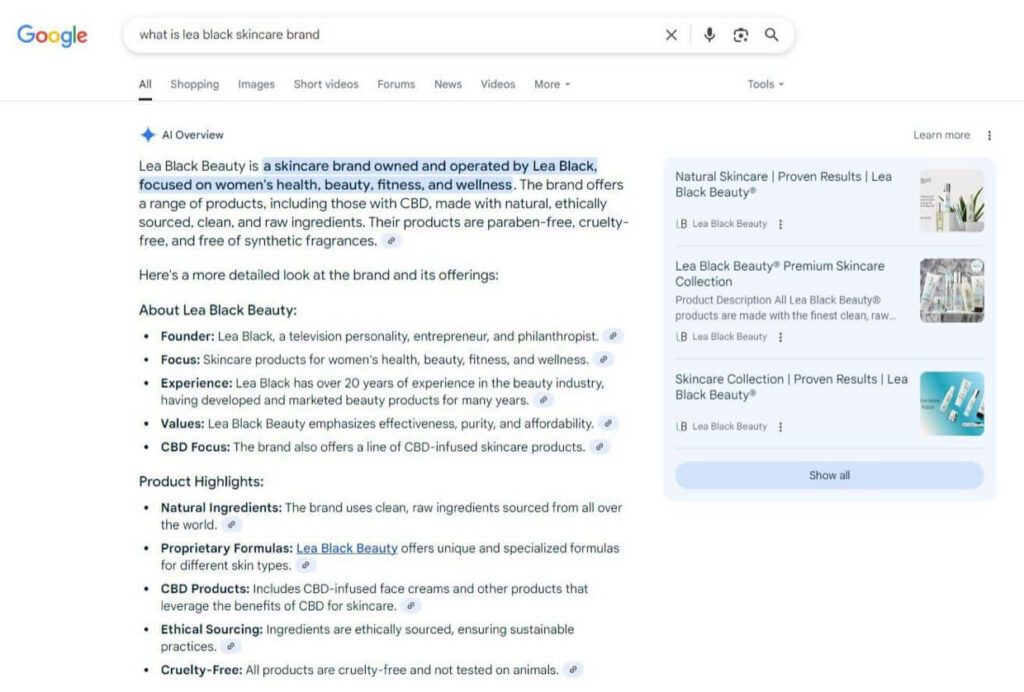
Whether or not someone clicks a link, Lea Black Beauty is still getting a potent spotlight. The AIO succinctly describes the brand and products, giving even non-clickers are complete overview. Today’s zero-click searches can be tomorrow’s sales!
Reevaluating and Readjusting Your Content Strategy
What is a zero-click search? It’s an opportunity to figure out why the user didn’t convert and make adjustments to your content accordingly.
For example, let’s say you have a blog post that’s still getting a ton of clicks while other blogs don’t. Analyze what makes it unique. Are there special images or videos? Is there something about the keywords? The formatting? Is the topic especially niche? What’s the typical demographic of clickers?
By finding answers to these types of questions, you can revamp old content and create new content that aligns with the winning strategy.
Partner With the Experts
Taking steps to overcome zero-click searches is already crucial, and the urgency will increase as AI evolves. Now is the time to implement zero-click search optimization before the competition catches on.
Our case studies and reviews say it all. Contact us now for a free consultation about how we can use zero-click SEO to get your numbers back up.